Place a trade
This guide walks through locking one hedge, start to finish: the taker funds the balance, fills one ticket, takes the firm quote, and signs to bind it. When the trade binds, the initial margin moves into escrow neither side can touch; until then, the collateral stays withdrawable in the margin account. Time: ~5 min to read, ~3 min to do.
To place the same trade through the API, with code, see Trade: Get Started (~5 min).
Pick the pair
In this step, the trader picks the currency pair being hedged. Open New hedge. The whole trade lives on one card. Start with the pair: click the settle currency and choose it from the list. Every supported pair is one tap away. The held currency sits on the leg above it, and the ⇅ between them flips which is which.
There is no desk to pick. The firm onboarded to the network once, and every request routes through it.
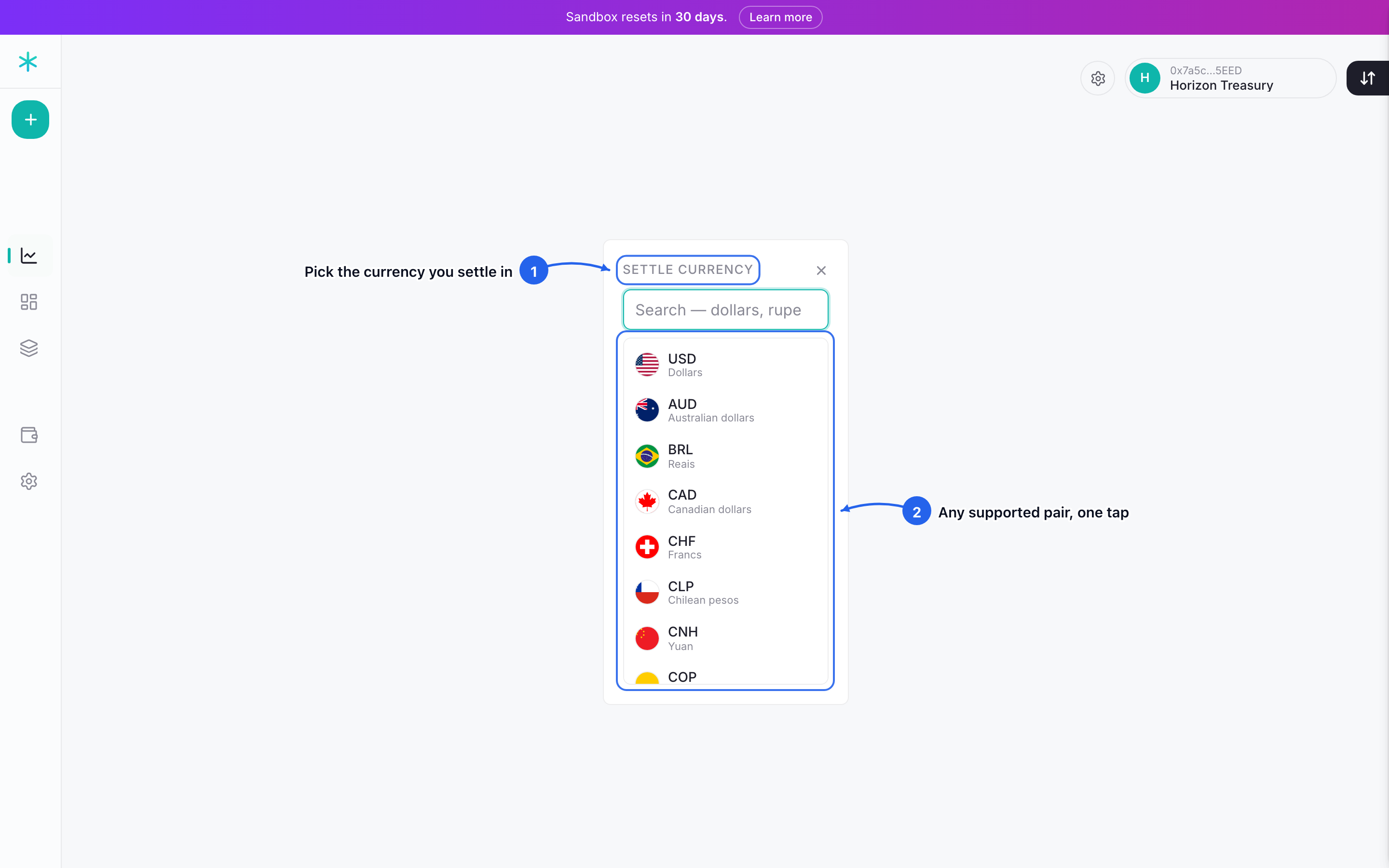 Click the settle leg and pick the settle currency. Every supported pair is one tap away.
Fill the ticket
Type the amount being hedged into the held leg. The second leg estimates the other currency at the live rate as the amount is typed, and the line beneath the card shows the rate and the margin the trade will lock. How that margin is sized: Margin requirements (~4 min).
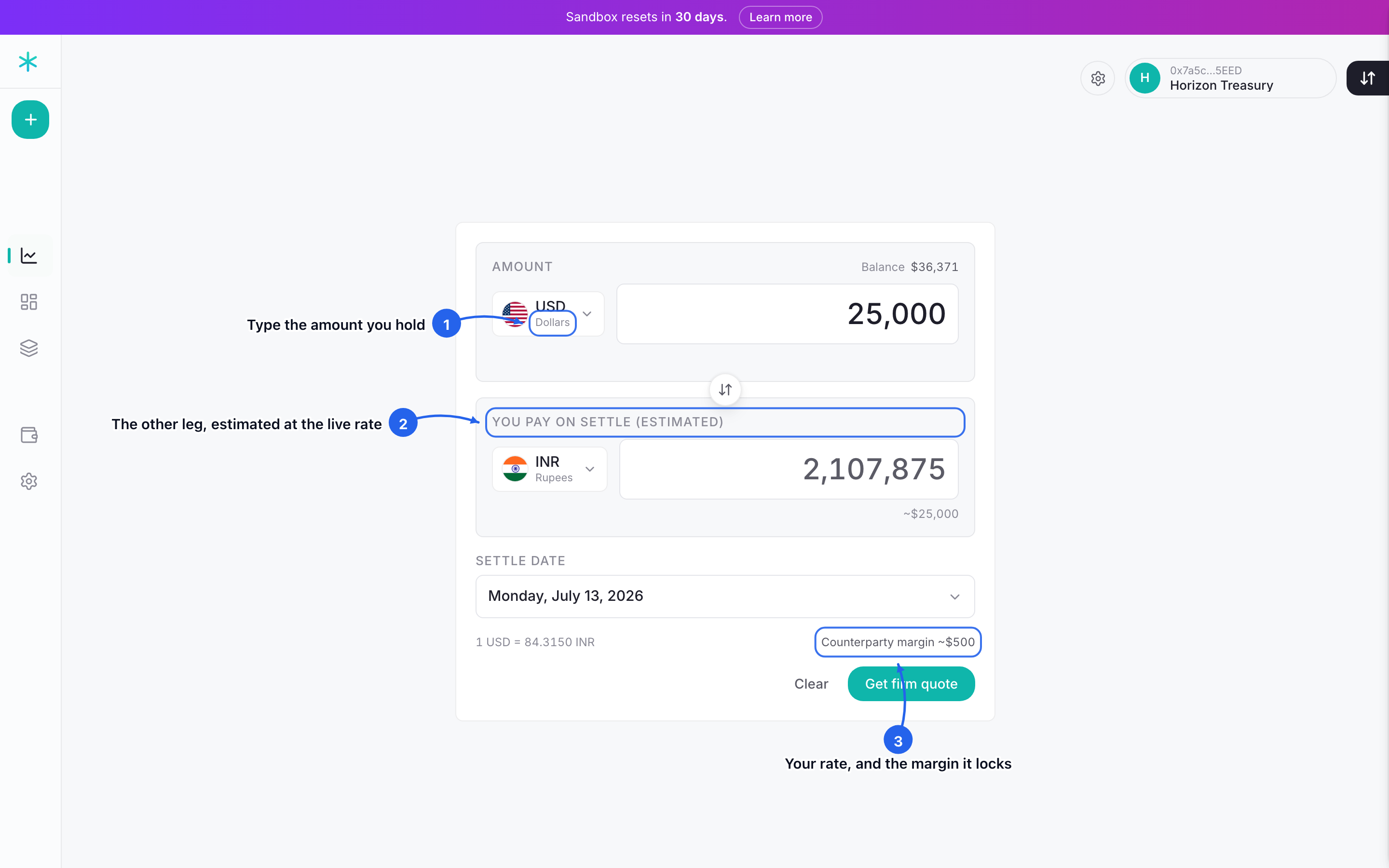 Type the held amount; the other leg, the live rate, and the margin fill in beneath.
Choose the settle date
Click the Settle date row, and a calendar opens beneath it. It is a bank calendar: only business days for the pair are selectable, with weekends and the pair's holidays greyed out. Pick the day the hedge cash-settles.
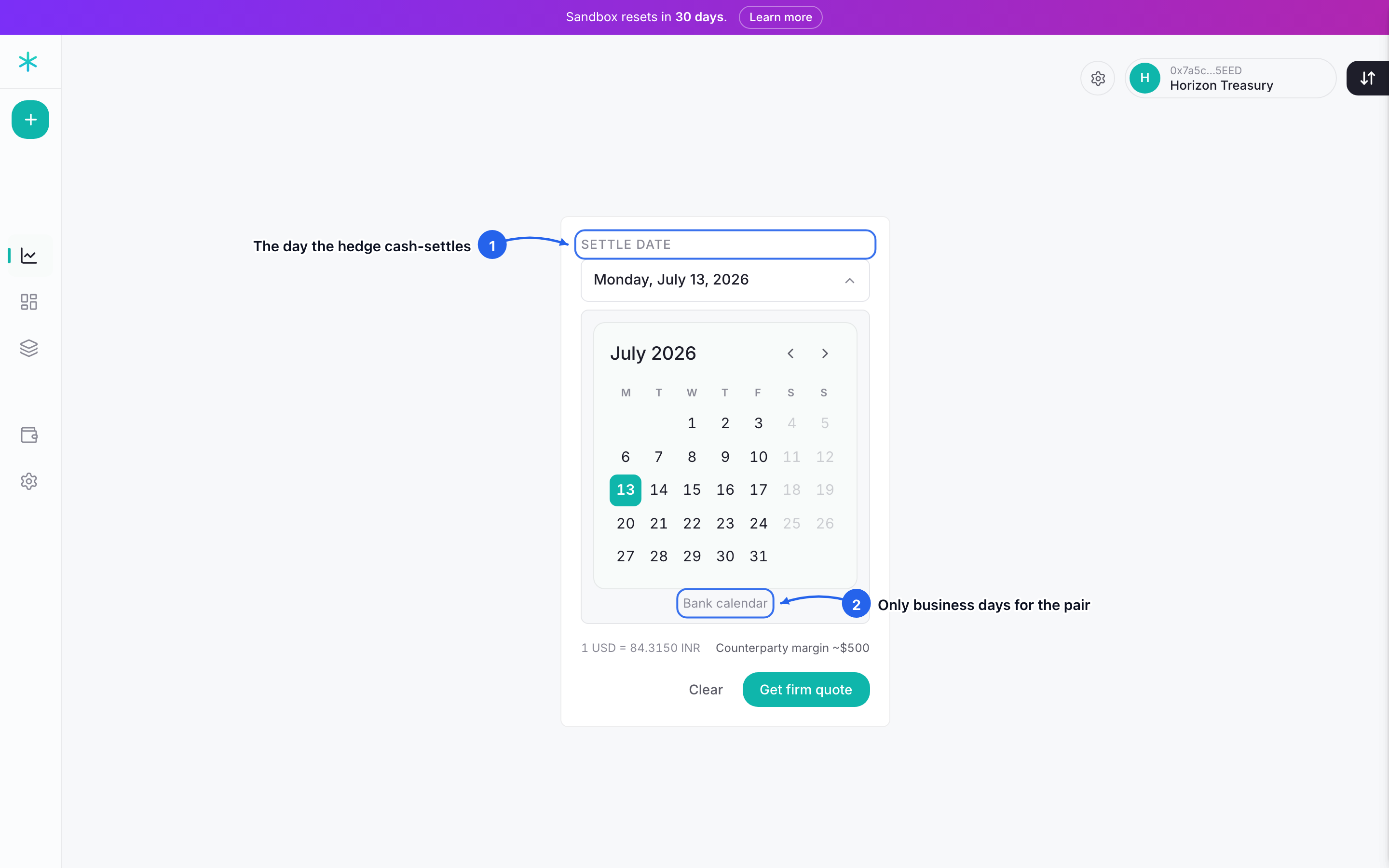 The settle-date calendar opens beneath the row. Only business days for the pair can be picked.
Get a firm quote
Click Get firm quote. The request is priced and the Terms signed, and the relayer anchors the agreed quote on-chain. A firm rate returns with a countdown, the validity window, and the margin it will hold against the balance.
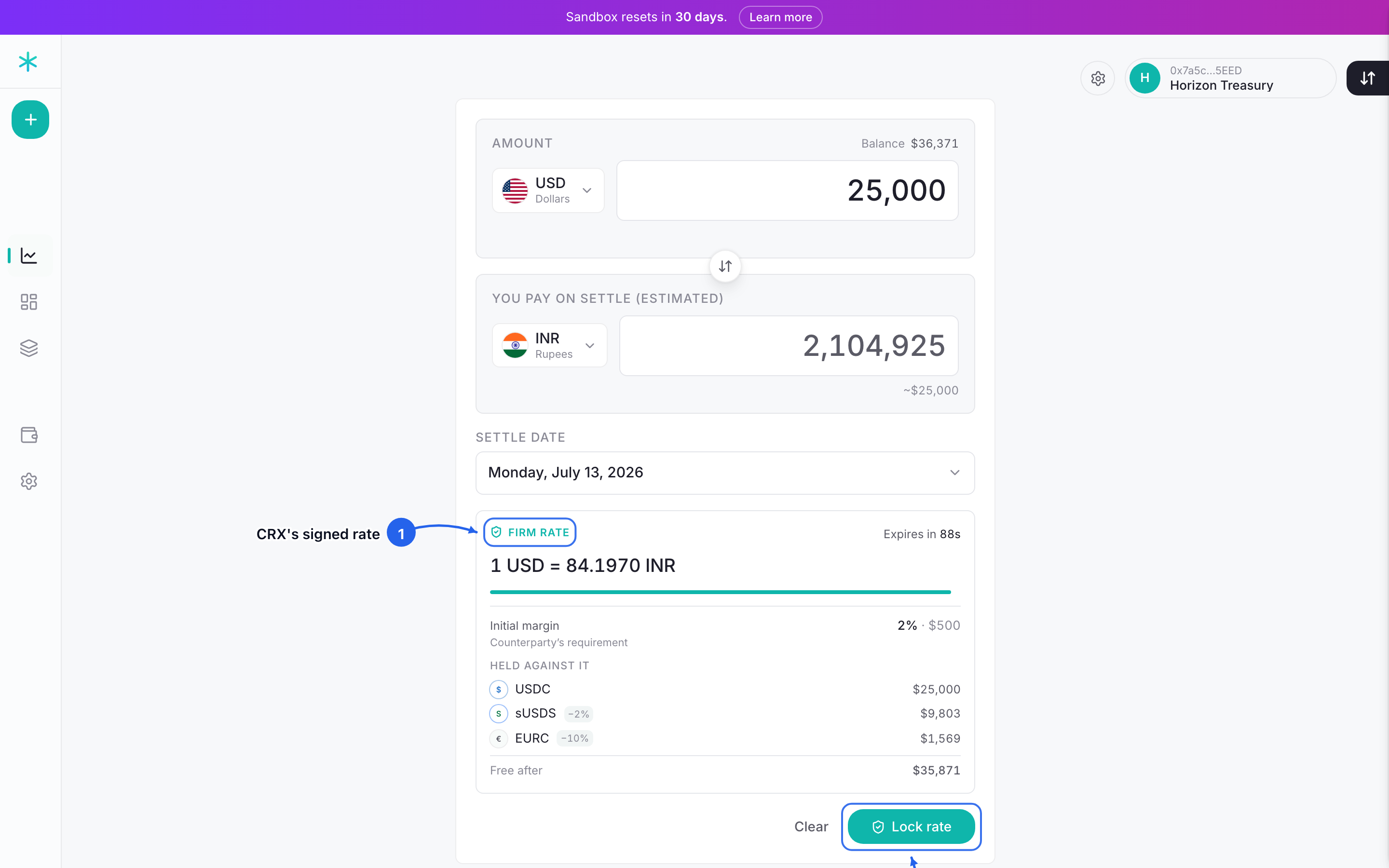 The signed firm rate, with a draining countdown and the margin it holds. Lock rate signs the same Terms.
Lock the rate
Click Lock rate before the countdown runs out. The taker signs the same Terms, and the risk engine opens the position atomically on-chain — both sides in one transaction, cash-settling in USDC at the locked rate.
The following diagram shows the signing flow:
If the countdown reaches zero first, the quote expires; request a fresh one.
WarningSign inside the deadline. Bind the Terms before the signing deadline passes, or request a fresh quote. A stale signature reverts, and nothing partial happens.
What binds the trade?
Two signatures bind the trade, not a login. The quote arrives already signed, and the taker signs the same Terms on accepting; both signatures are EIP-712. With both present and the agreed quote anchored, the contract accepts the bind and opens both sides of the position in one transaction. There is no session and no password: the two signatures are the authorization. The contract verifies the signed Terms, not intent, and the bind covers exactly the Terms the relayer anchored. For the Terms object, its fields, and how the trade id derives, see Accepting a Quote (~2 min). To learn why the quote is firm and expires, see Request for Quote (~2 min).
Next: Manage a position (~3 min). Watch the hedge, and let it settle.